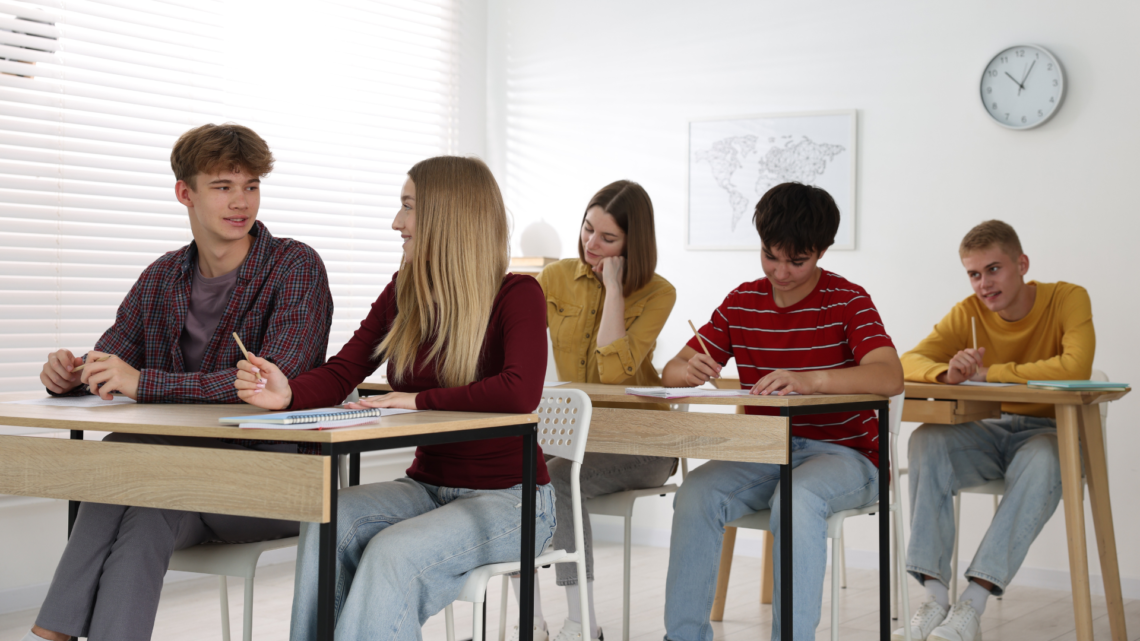
Strategies for Boosting Concentration in the Classroom
Concentration is the quiet engine behind most learning. When it is working well, almost everything else gets easier. When it is not, even very able children can find the school day a slog. The good news for parents and teachers is that concentration is a skill, not a fixed personality trait, and there is a lot we can do to strengthen it.
Start With Sleep
Almost every conversation about a child’s concentration eventually comes back to sleep. Children of primary school age generally need 9 to 11 hours, and teenagers need 8 to 10. Most children in the UK fall short of that on weekdays. A child who is even one hour under the right amount of sleep will show classic signs of poor concentration: short focus, irritability, daydreaming, careless mistakes. Before changing anything else, protect their sleep.
Build Focus Like a Muscle
Schools like Tettenhall College, with its long tradition of broad academic and outdoor learning, often see concentration improve steadily across a year because pupils are regularly asked to focus for sustained periods. You can mirror that at home by giving your child small, structured focus tasks that grow over time.
Twenty minutes of uninterrupted reading. Fifteen minutes of music practice. Half an hour of a puzzle, jigsaw or model-building activity. The exact task matters less than the principle: regular practice at sustaining attention.
Reduce the Friction
Most concentration problems are environmental rather than dispositional. Look hard at the conditions under which your child does homework or revision:
- Is the desk uncluttered? Visual noise is a real enemy of focus.
- Is the phone in a different room? Even a face-down phone in the same room reduces measurable focus.
- Is the lighting good? Children concentrate better in well-lit spaces without screen glare.
- Is the chair the right height? Physical discomfort drags attention away faster than you would expect.
- Are siblings, pets and TV out of earshot for that window?
Work in Sprints
The classic focus tool used in many secondary schools is the Pomodoro technique: 25 minutes of focused work followed by a five-minute break, repeated. For younger children, shorter cycles work better, perhaps 15 minutes of focus followed by five minutes off. Use a visible timer. Children respond to seeing the time tick down in a way that they do not to vague injunctions to concentrate.
Crucially, do not extend the focus periods to make up for lost time. Short, regular, completed cycles teach the brain that focus has a beginning and an end. That predictability makes the next cycle easier.
Notice What Engages Them
Every child has at least one activity in which they can concentrate effortlessly. Lego, drawing, football, baking, gardening, coding, board games. Use those moments to build their sense of what real focus feels like, and bridge from there into school tasks.
I can see how well you concentrated on that Lego build. That is the feeling we want when you are doing your maths. Naming the experience helps the child recognise and replicate it.
Movement Helps
Physical activity is one of the most underused tools for improving concentration. A 15-minute run, walk or cycle before homework primes the brain in a measurable way. Schools that protect outdoor break time, like Tettenhall, often find that the lessons after a longer outdoor break are some of the most productive of the week.
Talk About Attention
Older children benefit from understanding their own attention. Talk explicitly about what makes focus hard, what makes it easier, and what to do when it slips. Teach them to notice when they have drifted, and to bring themselves back without self-recrimination. That kind of metacognition is one of the strongest predictors of academic progress in the secondary years.
Concentration is not a magic gift bestowed on the lucky. It is a skill built by practice, by good conditions and by careful adult support. Lay the groundwork now, and your child will carry those habits into university, work and the rest of their life. For more on broad, balanced education, visit https://www.tettenhallcollege.co.uk/.
| About the Author This article was contributed by Tettenhall College, an independent co-educational day and boarding school in Wolverhampton, with a long-standing reputation for academic balance, outdoor learning and pastoral strength. Learn more: https://www.tettenhallcollege.co.uk/ |


You May Also Like

The Benefits of Summer School for Children

Simple STEM Activities You Can Do at Home